
Virtual Girls: Premium Free Tools, Realistic Conversation, and Safety Tips 2026
This represents the direct guide to the 2026 “Artificial Intelligence girls” environment: what’s actually free, the extent to which realistic conversation has become, and how to remain safe while navigating AI-powered undress apps, online nude creators, and NSFW AI tools. Users will get a realistic look at current market, quality benchmarks, and an essential consent-first safety playbook they can use instantly.
This term “AI companions” covers three separate product categories that frequently get conflated: virtual chat companions that emulate a girlfriend persona, explicit image generators that create bodies, and intelligent undress apps that attempt clothing elimination on authentic photos. All category involves different costs, quality ceilings, and threat profiles, and confusing them up is where many users become burned.
Defining “AI girls” in the current year
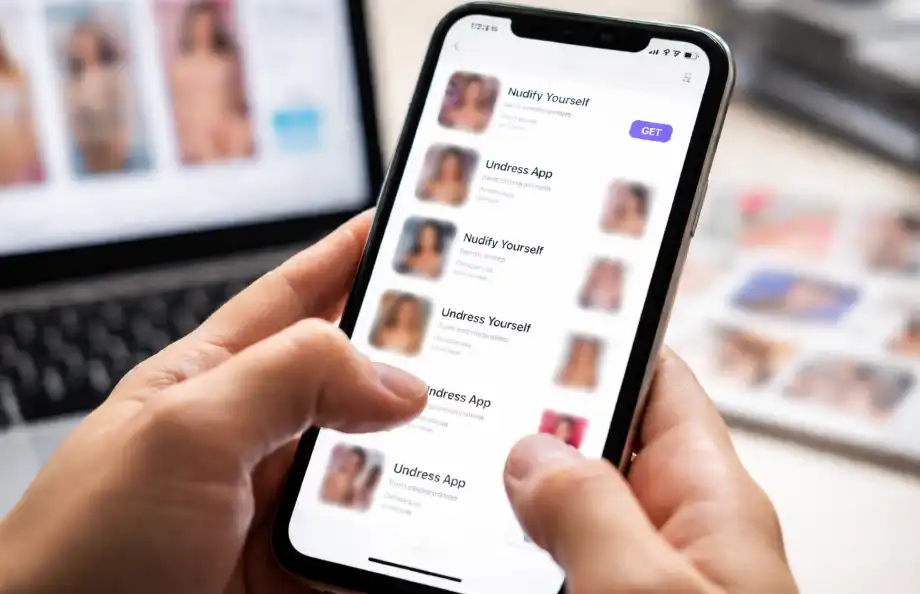
AI girls now fall into three clear groups: chat chat apps, adult image creators, and apparel removal tools. Chat chat emphasizes on personality, retention, and audio; image synthesizers aim for realistic nude creation; undress applications attempt to infer bodies underneath clothes.
Interactive chat applications are typically the least lawfully risky because these platforms create virtual personas and synthetic, synthetic material, often gated by explicit content policies and user rules. Mature image creators can be more secure if utilized with completely synthetic prompts or artificial personas, but these systems still present platform guideline and privacy handling questions. Nude generation or “Deepnude”-style applications are the most dangerous category because these tools can be misused for non-consensual deepfake material, and various jurisdictions currently treat this as a prosecutable offense. Establishing your goal clearly—interactive chat, artificial fantasy content, or realism tests—establishes which route is appropriate and how much much security https://undress-ai-porngen.com friction you must accept.
Market map with key participants
The market divides by purpose and by the way the products are produced. Names like these platforms, DrawNudes, different apps, AINudez, Nudiva, and PornGen are promoted as artificial intelligence nude generators, online nude creators, or automated undress utilities; their marketing points tend to focus around authenticity, efficiency, price per render, and confidentiality promises. Companion chat platforms, by comparison, compete on communication depth, latency, recall, and audio quality instead than on graphic output.
Given that adult AI tools are unstable, assess vendors by their documentation, instead of their ads. As a minimum, search for an explicit consent policy that forbids non-consensual or underage content, an explicit clear content retention statement, a way to delete uploads and generations, and open pricing for usage, subscriptions, or API use. When an undress app features watermark stripping, “zero logs,” or “designed to bypass security filters,” view that as a danger flag: ethical providers refuse to encourage non-consensual misuse or regulation evasion. Consistently verify integrated safety mechanisms before anyone upload material that could identify any real person.
Which artificial intelligence girl apps are actually free?
Most “free” options are limited: you’ll receive a finite number of generations or interactions, advertisements, watermarks, or reduced speed prior to you subscribe. A truly free experience usually includes lower clarity, processing delays, or extensive guardrails.
Expect companion conversation apps to provide a limited daily allocation of communications or credits, with explicit toggles often locked within paid plans. Adult visual generators typically include a few of low-res credits; premium tiers unlock higher quality, quicker queues, private galleries, and personalized model configurations. Undress apps rarely remain free for long because processing costs are substantial; they typically shift to pay-per-use credits. If one want free experimentation, try on-device, open-source models for communication and SFW image testing, but refuse sideloaded “garment removal” binaries from untrusted sources—such files are a frequent malware delivery method.
Comparison table: choosing the correct category
Pick your tool class by matching your intent with potential risk one is willing to accept and any required consent you can secure. The table presented here outlines the benefits you typically get, what it costs, and how the pitfalls are.
| Type | Common pricing structure | Features the no-cost tier includes | Key risks | Best for | Consent feasibility | Privacy exposure |
|---|---|---|---|---|---|---|
| Companion chat (“AI girlfriend”) | Freemium messages; subscription subs; premium voice | Finite daily conversations; basic voice; NSFW often locked | Excessive sharing personal information; emotional dependency | Role roleplay, relationship simulation | Excellent (synthetic personas, no real individuals) | Moderate (conversation logs; verify retention) |
| Mature image generators | Tokens for outputs; upgraded tiers for high definition/private | Basic quality trial credits; watermarks; processing limits | Guideline violations; exposed galleries if lacking private | Synthetic NSFW content, artistic bodies | High if completely synthetic; secure explicit consent if utilizing references | Considerable (submissions, descriptions, generations stored) |
| Clothing removal / “Clothing Removal Tool” | Individual credits; scarce legit no-cost tiers | Infrequent single-use attempts; prominent watermarks | Illegal deepfake responsibility; malware in shady apps | Research curiosity in controlled, consented tests | Minimal unless every subjects explicitly consent and remain verified adults | High (face images submitted; major privacy risks) |
To what extent realistic is conversation with digital girls currently?
Advanced companion chat is impressively convincing when vendors combine strong LLMs, temporary memory buffers, and persona grounding with expressive TTS and minimal latency. The weakness emerges under intensive use: long conversations drift, limits wobble, and emotional continuity fails if storage is insufficient or safety measures are variable.
Quality hinges on four levers: response time under two seconds to keep turn-taking smooth; persona frameworks with reliable backstories and limits; audio models that convey timbre, tempo, and breathing cues; and retention policies that retain important information without hoarding everything users say. To ensure safer experiences, explicitly set boundaries in your first communications, avoid revealing identifiers, and select providers that provide on-device or end-to-end encrypted communication where available. If a communication tool markets itself as a completely “uncensored partner” but fails to show methods it secures your conversation history or supports consent practices, step aside on.
Judging “realistic naked” image performance
Excellence in a realistic NSFW generator is not primarily about hype and mainly about body structure, visual quality, and coherence across body arrangements. The best machine learning models process skin fine detail, body part articulation, finger and appendage fidelity, and fabric-to-skin transitions without edge artifacts.
Nude generation pipelines tend to break on blockages like folded arms, stacked clothing, belts, or tresses—watch for malformed jewelry, inconsistent tan marks, or lighting that cannot reconcile with an original picture. Fully synthetic creators fare more effectively in stylized scenarios but may still hallucinate extra appendages or misaligned eyes under extreme descriptions. In realism evaluations, compare generations across different poses and illumination setups, zoom to double percent for edge errors at the clavicle and hips, and verify reflections in glass or reflective surfaces. If a platform hides initial photos after sharing or prevents you from deleting them, this is a deal-breaker regardless of visual quality.
Security and consent guardrails
Use only consensual, adult material and don’t uploading identifiable photos of real people only if you have explicit, written permission and a legitimate reason. Several jurisdictions prosecute non-consensual synthetic nudes, and services ban AI undress use on genuine subjects without consent.
Adopt a consent-first norm also in individual settings: get clear permission, store documentation, and keep uploads anonymous when feasible. Don’t ever attempt “garment removal” on images of people you know, public figures, or anyone under eighteen—ambiguous age images are off-limits. Refuse any tool that claims to evade safety protections or strip away watermarks; those signals associate with regulation violations and elevated breach danger. Most importantly, remember that intent doesn’t remove harm: generating a unauthorized deepfake, also if you never share it, can nevertheless violate regulations or conditions of service and can be devastating to any person depicted.
Data protection checklist in advance of using all undress tool
Minimize risk via treating each undress app and online nude synthesizer as a potential data storage threat. Favor platforms that manage on-device or offer private mode with end-to-end encryption and clear deletion controls.
In advance of you upload: read the confidentiality policy for storage windows and outside processors; ensure there’s some delete-my-data process and available contact for removal; refrain from uploading facial features or unique tattoos; remove EXIF from photos locally; employ a disposable email and financial method; and sandbox the tool on an isolated separate user profile. When the app requests photo roll rights, reject it and only share specific files. When you encounter language like “might use your uploads to train our algorithms,” assume your material could be kept and operate elsewhere or refuse to upload at any point. When in doubt, never not share any image you would not be accepting seeing leaked.
Detecting deepnude results and internet nude synthesizers
Detection is incomplete, but technical tells include inconsistent shadows, unnatural skin shifts where clothing was, hair edges that cut into flesh, jewelry that blends into the skin, and mirror images that don’t match. Enlarge in around straps, bands, and digits—the “apparel removal tool” often struggles with transition conditions.
Look for unnaturally uniform surface detail, duplicate texture tiling, or smoothing that seeks to hide the seam between artificial and real regions. Check data tags for lacking or default EXIF when any original would contain device tags, and perform reverse picture search to see whether the identity was lifted from a different photo. Where available, verify content authenticity/Content Credentials; various platforms insert provenance so users can identify what was altered and by which party. Use independent detectors cautiously—such systems yield erroneous positives and negatives—but merge them with human review and provenance signals for stronger conclusions.
Steps should you do if someone’s image is used non‑consensually?
Act quickly: preserve evidence, submit reports, and utilize official removal channels in parallel. You need not need to establish who generated the fake image to begin removal.
First, capture web addresses, date stamps, website screenshots, and digital fingerprints of the content; preserve page HTML or archival snapshots. Second, flag the material through the website’s impersonation, nudity, or synthetic media policy channels; many major platforms now provide specific unauthorized intimate content (NCII) reporting systems. Third, submit a deletion request to web search engines to reduce discovery, and file a legal takedown if the person own the original photo that got manipulated. Fourth, reach out to local police enforcement or some cybercrime division and give your documentation log; in some regions, deepfake and fake content laws enable criminal or civil remedies. If one is at risk of additional targeting, explore a alert service and consult with a cyber safety nonprofit or lawyer aid group experienced in non-consensual content cases.
Lesser-known facts meriting knowing
Detail 1: Many services fingerprint photos with content hashing, which helps them identify exact and similar uploads across the web even post crops or slight edits. Detail 2: The Content Authenticity Organization’s C2PA protocol enables digitally signed “Media Credentials,” and some growing quantity of devices, editors, and media platforms are testing it for authenticity. Point 3: Both Apple’s App Store and the Google Play restrict apps that facilitate non-consensual NSFW or intimate exploitation, which represents why several undress applications operate exclusively on available web and outside mainstream marketplaces. Fact 4: Cloud services and core model providers commonly ban using their platforms to generate or distribute non-consensual explicit imagery; if a site advertises “uncensored, no rules,” it might be violating upstream policies and at greater risk of abrupt shutdown. Fact 5: Malware disguised as “clothing removal” or “automated undress” programs is widespread; if some tool isn’t internet-based with clear policies, regard downloadable binaries as threatening by default.
Final take
Use the correct category for each right job: relationship chat for roleplay experiences, mature image generators for synthetic NSFW art, and stay away from undress applications unless you possess explicit, mature consent and an appropriate controlled, confidential workflow. “Complimentary” usually involves limited access, branding, or reduced quality; subscriptions fund the computational time that enables realistic conversation and content possible. Above all, treat privacy and permission as essential: limit uploads, lock down data erasure, and step away from any app that suggests at deepfake misuse. If you’re evaluating platforms like these services, DrawNudes, different apps, AINudez, Nudiva, or related apps, experiment only with unidentifiable inputs, verify retention and removal before you engage, and don’t ever use pictures of genuine people without clear permission. Realistic AI experiences are achievable in 2026, but these services are only valuable it if users can achieve them without violating ethical or lawful lines.